I keep going back and forth on this and talking myself in circles, so I figure it’s time to ask people who cut these parts every week.
When a part has features on several faces, it’s easy to assume five axes automatically means shorter lead time. But where is the time actually won back — in the cut itself, or in the setup work around it?
The way I see it, a straight 3-axis job usually ends up in two or three fixtures with the same datums re-indicated every time. Indexing around a 4th axis lets you reach most of the features without ever unclamping the part. 3+2 looks like the middle ground for angled work since you’re not depending on continuous motion, and full simultaneous toolpaths only seem worth the extra programming on blended, contoured surfaces.
Part geometry sort of decides the axis count up front, but the rest is what trips me up: programming hours, tool reach, what the workholding will tolerate, and whether the machine simulation actually agrees with what happens on the control. Fewer setups sound great until the post spits out something the machine doesn’t like.
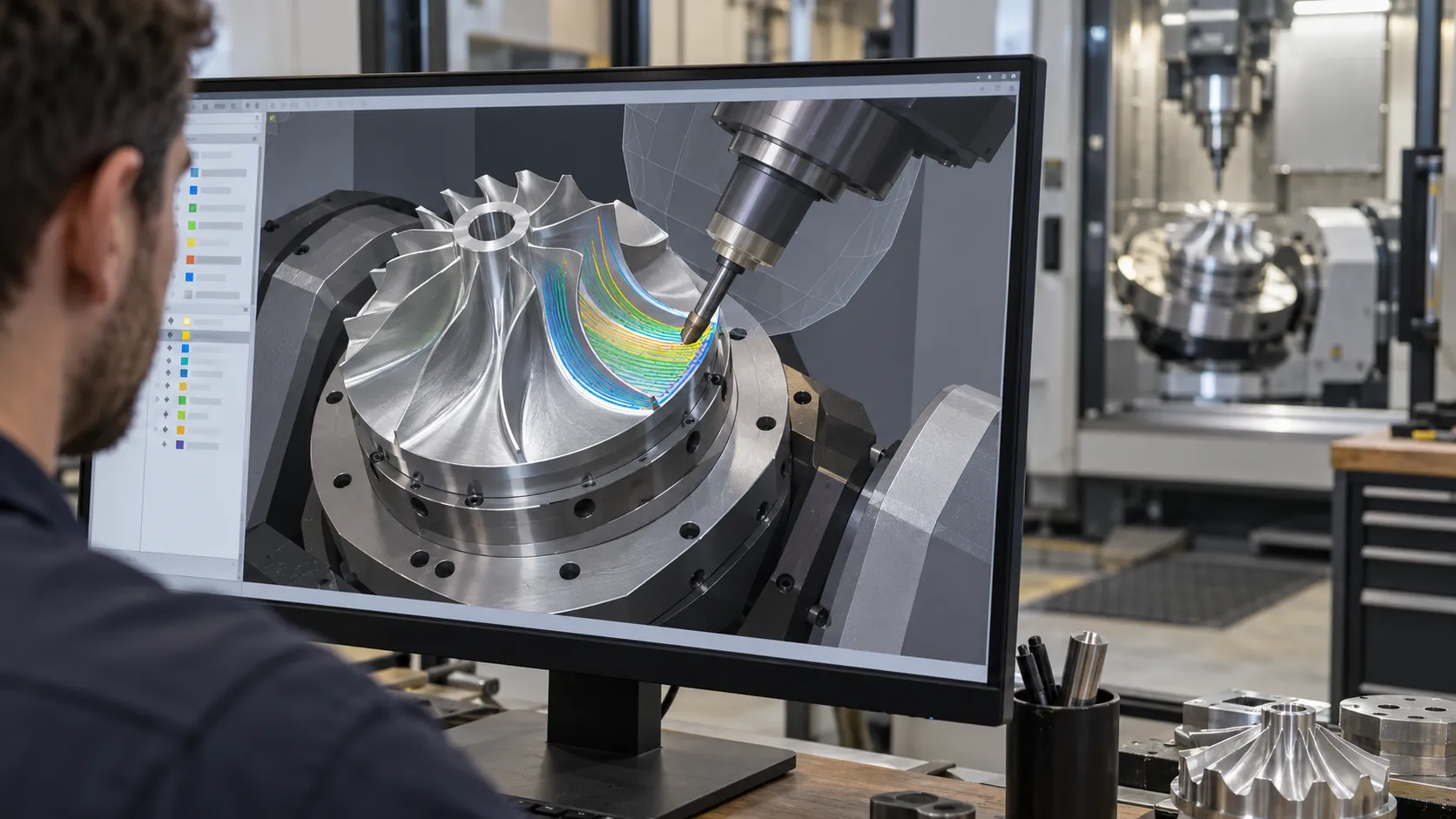
For reference, the screenshot attached is a 5-axis impeller toolpath sim I’ve been picking apart while thinking about this.
So for those of you programming multi-face parts regularly — where’s your personal cutoff between indexed work and simultaneous? And what do you check in CAM before making that call?